

International Women’s Day is celebrated every March, and we’re highlighting the voices and experiences of our leaders who help shape Australia’s intelligence capability. Their insights reflect not only their professional journeys, but the collective progress and remaining challenges, across the IT landscape, legal and assurance and corporate governance within an intelligence environment.
Our leaders’ reflections offer a candid look at growth, resilience and the opportunities ahead for women in intelligence.
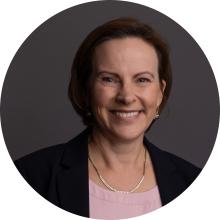
Anita van Hilst National Manager Examinations and Operational Enablement
Anita has seen how the intelligence workplace has evolved, and recalls that earlier in her career, women’s contributions were rarely sought, and when they were, they were often overlooked. While she notes there is now far greater balance, respect and inclusion, Anita emphasises that progress requires continued awareness and effort from everyone.
We asked Anita for a defining moment in her career, and she points to her first offshore liaison opportunity – an experience that opened her eyes to the breadth of intelligence work. She describes the field as “100 jobs within a job” and encourages young women to take their time, stay curious and back themselves, noting that intelligence offers lasting impact, continuous learning and connections well beyond a single role.
Anita believes many women thrive in intelligence roles because the work aligns naturally with how they think, driven by curiosity, evidence‑based analysis, critical questioning and corroboration. She describes intelligence as a field that values these strengths and offers remarkable variety. Her own path began in policing before transitioning into intelligence later in life, reinforcing her view that there is no single pathway into the profession and that diverse experience strengthens outcomes.
“Technology is enabling incredible cross‑domain, cross‑mission collaboration, but nothing replaces person‑to‑person connection when it comes to working effectively together.”

Heidi Madden Executive Director Intelligence and Information Systems
We asked Heidi what most people miss when they are thinking about intelligence work, ongoing gaps, and a message she may have for the next generation?
Heidi says that while recognition of women’s contributions in intelligence has improved over the years, significant gaps remain, particularly the limited number of women in senior IT roles.
Heidi encourages the next generation, especially young women, to see the intelligence community as full of possibility, underpinned by an array of disciplines including diverse ICT career paths. There are opportunities ranging from stakeholder engagement and analytics to software engineering, cyber, project management and infrastructure. Heidi also notes that people often underestimate the role of IT in intelligence, reminding us that it is not a background function but a critical enabler of every part of the mission, from core intelligence operations to essential back‑office services like payroll, travel and procurement.
“We’ve made progress, but women remain underrepresented in senior IT roles.”
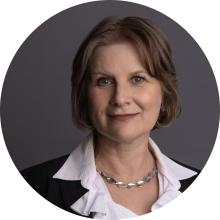
Nicole Mayo Chief Counsel, Executive Director Legal and Assurance and Chief Security Officer
Having worked in intelligence for more than a decade, Nicole understands that courage in this environment is grounded in judgement. It is knowing when to act decisively, when to influence or negotiate, and when to accept that not every battle can, or should, be fought. In a high‑stakes, complex operating environment, doing the right thing when it counts, particularly when it is difficult, is a value she strives to lead by and be remembered for.
Nicole is candid about the realities of leadership in intelligence, particularly for women. As seniority increases, so too does the complexity of issues and the sense of isolation that can come with decision‑making. This is why she strongly advocates for mentoring (formal or informal) at every stage of a career. Trusted mentors provide perspective, challenge thinking, and help leaders navigate ambiguity and risk.
Nicole also emphasises the importance of strong networks within the intelligence community: building relationships, finding allies and advocates, and using influence to support others. While significant progress has been made in women’s representation, Nicole reminds us that self‑doubt and personal challenges are universal, regardless of role or rank.
“Women’s advancement into leadership starts with the way we see ourselves.”
Not subscribed to our newsletter yet? Join our mailing list.